
I want to be honest with you about something. A few years ago, I was at a local park with my nephew when a man started pacing near the swings, talking to himself. I froze. I did not know if he was dangerous, struggling, or just having a bad day. That moment comes back to me every time a story like this one surfaces online.
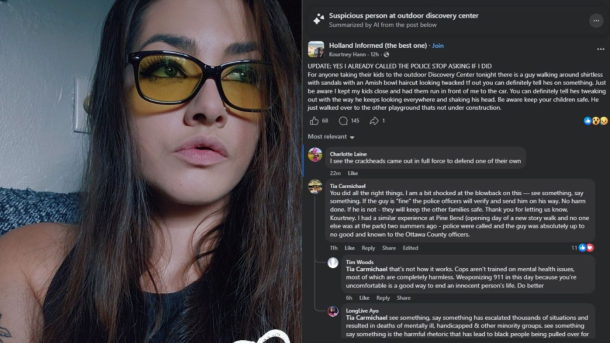
This time, it happened at the Outdoor Discovery Center in Holland, Michigan. A mother named Kourtney Hann posted about her experience on Facebook, and the response from her community was swift, loud, and split right down the middle.
What Kourtney Hann Reported at the Outdoor Discovery Center
Hann was visiting the Outdoor Discovery Center with her children when she noticed a shirtless man wearing sandals near the playground and trail areas. She described him as disoriented. She said he was looking around frequently in a way that made her feel uneasy. She kept her children close and left the area. Before leaving, she called the police.
Her Facebook post spread quickly across local community groups in Holland and the broader Ottawa County area. What followed was exactly what you would expect from the internet in 2024: a heated comment section where neighbors argued about fear, judgment, and what responsible parenting actually looks like in a public space.
What Her Neighbors Said
The comments broke into two very clear camps.
One group backed her completely. Tia Carmichael pointed out that if the man posed no threat, a police check would confirm that and everyone moves on. She shared that a similar situation she experienced at Pine Bend two summers ago ended with officers confirming the person was known to them and was in fact up to something. Her view: reporting is not accusing. It is a precaution.
Chris Parish added that a shirtless adult man with no children near a playground raises a reasonable flag for parents, and getting kids out of the situation first is the right instinct regardless of how the story ends.
The other group was just as vocal. Tim Woods raised the concern that police are not trained to handle mental health crises, and that calling 911 because a situation feels uncomfortable can escalate quickly in ways nobody intends. He pushed back against the “see something, say something” framework as a blanket solution.
Heather N. Gonda made a point worth sitting with: unusual behavior in public does not automatically mean drugs or danger. There are medical episodes, neurological conditions, and mental health struggles that can look alarming to a bystander but are not a crime and not a threat.
Tammy Escamilla went further, arguing that the man was simply at the park before Hann arrived, and that calling the police on someone for walking a trail and occasionally looking around sets a troubling standard for how we treat people in shared public spaces.
Kourtney Hann Responded Directly
Hann did not go quiet. She defended her decision clearly, stating that her first job was getting her children away from something that felt wrong to her. She said she did contact police and expressed hope that if the man needed help, he would receive it through that contact. She also said she did not feel the man’s behavior was appropriate for a children’s park, which only added fuel to the debate already burning in her comments.
This Is a Real Tension, Not Just an Online Argument
What makes this story worth reading carefully is that both sides are reacting to something true.
Parents do have the right and the responsibility to protect their children. Trusting your instincts in a public space, especially near a playground, is not irrational. The U.S. Department of Homeland Security’s “See Something, Say Something” campaign encourages exactly this kind of reporting, with the understanding that law enforcement can assess and respond appropriately.
At the same time, research from organizations like the National Alliance on Mental Illness (NAMI) consistently shows that people experiencing mental health episodes are far more likely to be victims of violence than perpetrators of it. The concern that calling police on someone in a mental health crisis can lead to harm is not hypothetical. It has happened.
The honest answer is that this situation lives in the uncomfortable middle, where neither full reassurance nor full alarm is appropriate.
What Parents Can Actually Do in Situations Like This
If you find yourself at a park and something feels off, here is a practical framework that most child safety advocates support:
- Move your children away from the area immediately. Do not wait to gather more information.
- Stay in a visible public area near other adults if possible.
- Contact park staff or security before escalating to a 911 call if you have that option.
- If you do call police, describe the behavior you observed, not conclusions you have drawn. “A man is walking near the playground, appears disoriented, and is not wearing a shirt” is more useful than “I think he is on drugs.”
- Trust that you can leave a situation without it requiring an investigation.
The Child Welfare Information Gateway recommends a calm, observation-based approach when reporting concerns involving children’s safety in public environments.
Ottawa County and the Outdoor Discovery Center
The Outdoor Discovery Center in Holland is a nature and recreation facility in Ottawa County that draws families throughout the year. It features trails, a playground, and educational programming. It is the kind of place where a wide range of people show up: parents with strollers, trail runners, birders, school groups, and individuals simply walking through nature.
Ottawa County has its own sheriff’s office and coordinates with local Holland city police for incidents in shared recreational spaces. If you have a concern at the Outdoor Discovery Center specifically, you can contact the Ottawa County Sheriff’s Office directly.
My Own Take
Going back to that moment at the park with my nephew: I chose not to call anyone. The man eventually sat down on a bench, put his head in his hands, and after a while walked away slowly. I do not know his story. I stayed close to my nephew, kept my eyes open, and nothing happened.
Would I judge Kourtney Hann for making a different call? No. She was with multiple children and made the choice that felt safest to her in that moment. What I do think the community debate around her post gets right is this: we should keep asking these questions rather than pretending the answers are simple. They are not.
Frequently Asked Questions
Is it legal to be shirtless in a public park in Michigan?
Yes. Michigan law does not prohibit adults from being shirtless in public parks or recreational areas. Being shirtless is not by itself grounds for police involvement or removal from a public space.
What counts as suspicious behavior at a park?
Suspicious behavior generally involves specific actions that suggest potential harm, such as following children, photographing minors without apparent parental connection, or making direct threats. Appearing disoriented or speaking to oneself does not legally qualify as suspicious behavior, though it may prompt concern from bystanders.
What should I do if I see someone behaving oddly near a playground?
Move your children to safety first. If a park has staff on site, alert them. If you believe someone is in immediate danger or the situation is escalating, call 911. If you are uncertain, you can also call a non-emergency police line to report what you observed without triggering a high-priority response.
Can calling police on someone in a mental health crisis be harmful?
Yes, in some documented cases. Many police departments across the United States are now implementing co-responder programs that pair officers with mental health professionals for exactly this reason. NAMI and other advocacy organizations have resources on how to request mental health crisis support through local channels.
What is the Outdoor Discovery Center in Holland, Michigan?
It is a nonprofit nature center and park located in Holland, Michigan. It offers trails, wildlife exhibits, a playground, and educational programs for children and families. It sits within Ottawa County and is open to the general public.
Should parents always call police when they feel unsafe at a park?
Not always. Safety advocates recommend removing yourself and your children from the situation as the first step. Calling police is appropriate when you observe a specific, ongoing threat. For ambiguous situations, contacting non-emergency lines or park staff gives you a middle option that does not require a patrol car response.
What is “see something, say something” and does it apply here?
It is a public awareness campaign originally developed after the September 11 attacks to encourage reporting of genuinely suspicious activity, particularly related to terrorism and infrastructure threats. It has since been applied more broadly to public safety. Critics argue it can be misapplied in situations involving mental illness, homelessness, or simply people who look or behave differently from what observers expect. You may also be interested in: A Student Was Called a Racial Slur at School. Here Is What the Community Said and What You Can Do