
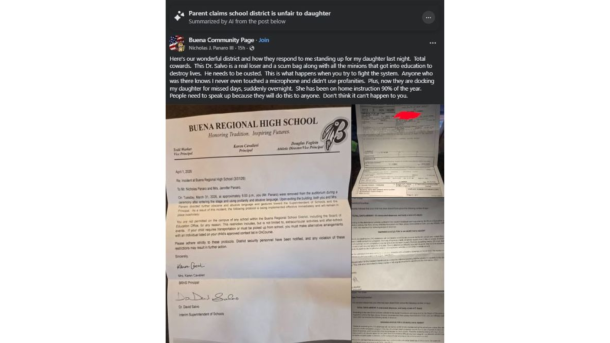
A father in Atlantic County, New Jersey, is speaking out after he says a local school district started docking his daughter’s attendance record the day after he challenged officials at a public board meeting. The story spread quickly on a community Facebook page and has people asking serious questions about how schools handle students with medical conditions, and whether parents face pushback when they speak up.
What the Father Says Happened
Nicholas J. Panaro III posted on the Buena Community Page on Facebook after what he described as a frustrating and retaliatory experience with the school district. His daughter has been on home instruction for most of the school year because of medical issues. He says that arrangement was in place and working, until he raised concerns at a board meeting.
The morning after he spoke up, he says the school suddenly began counting missed days against his daughter. No warning. No new policy notice. Just an overnight change that he believes was a direct response to him speaking at the meeting.
He wrote in his post:
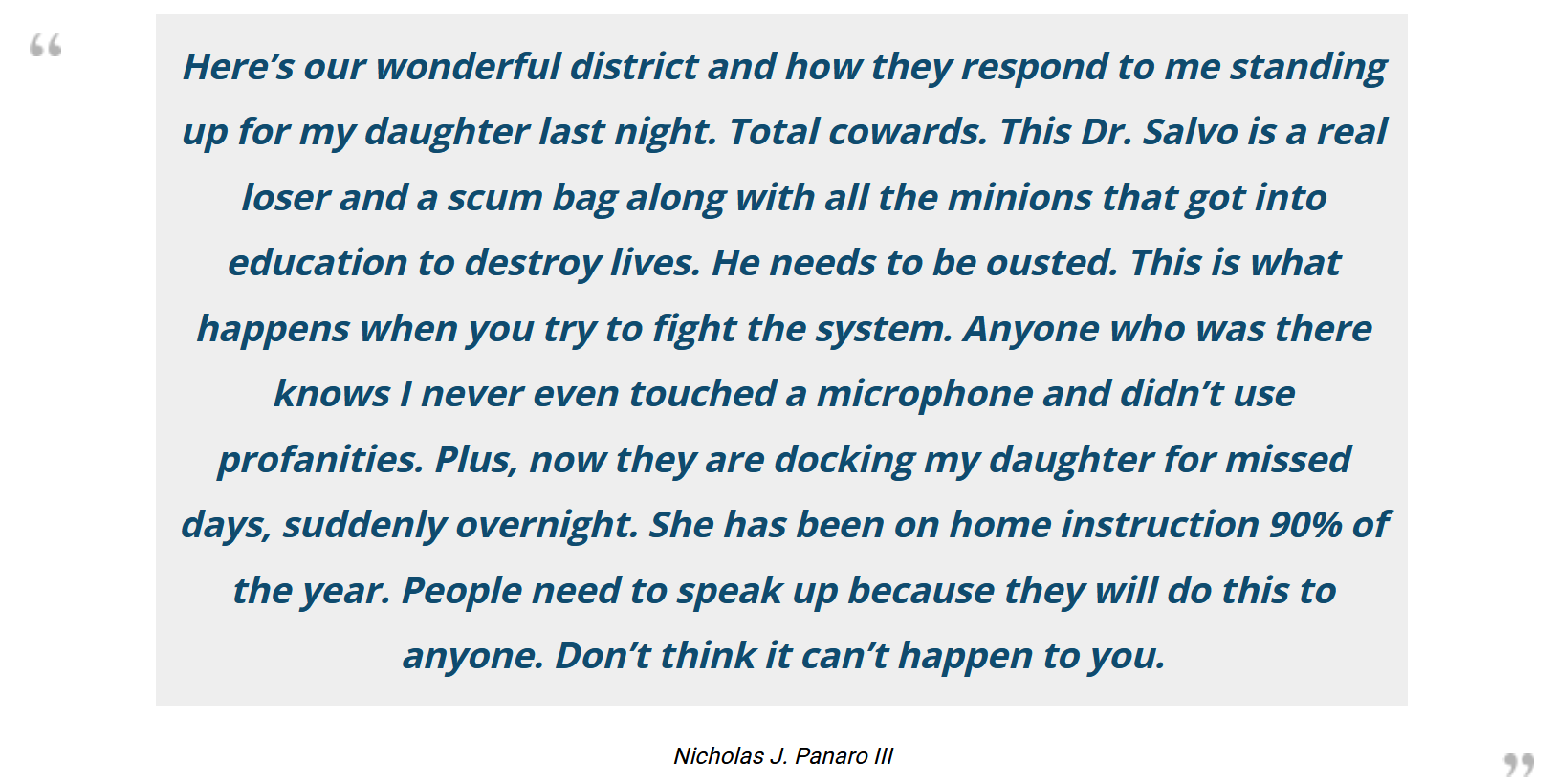
“Here’s our wonderful district and how they respond to me standing up for my daughter last night. Total cowards. This Dr. Salvo is a real loser and a scum bag along with all the minions that got into education to destroy lives. He needs to be ousted. This is what happens when you try to fight the system. Anyone who was there knows I never even touched a microphone and didn’t use profanities. Plus, now they are docking my daughter for missed days, suddenly overnight. She has been on home instruction 90% of the year. People need to speak up because they will do this to anyone. Don’t think it can’t happen to you.” — Nicholas J. Panaro III
Beyond the attendance issue, Panaro says his daughter worked hard throughout high school to qualify for the National Honor Society. He believes she met every academic requirement. His concern is that the district is now using attendance as a reason to block her from that recognition, which he argues ignores the reality of her medical situation.
Why This Matters to Other Parents
I have spoken with parents in different school districts who went through something similar. One mother told me her son was placed on home instruction after a surgery and later found out the school had not properly recorded his instructional hours. When she asked questions, things got tense fast. She eventually had to bring in a special education advocate just to get straight answers.
That is not an isolated story. When a child is medically absent and receiving home instruction, parents often assume the district is handling the paperwork correctly. Many do not find out otherwise until it affects grades, eligibility, or graduation requirements.
What the Community Said
The post got a lot of responses. Most were supportive of Panaro and pointed him toward legal options.
Anthony Gomez kept it short: “Consult a lawyer.”
Fred Plasket suggested going to a civil rights organization:
“Call the ACLU, they have disabilities lawyers. They’ll have a ball with this.” — Fred Plasket
Mark Simmermon shared his take:
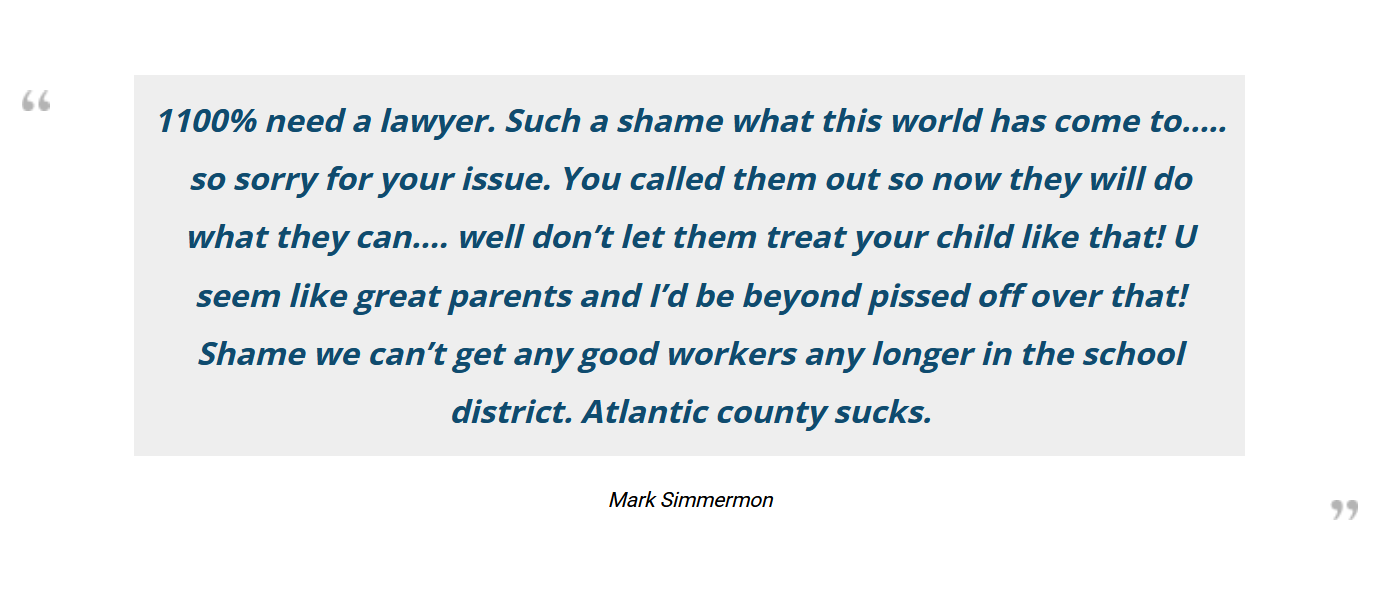
“1100% need a lawyer. Such a shame what this world has come to. So sorry for your issue. You called them out so now they will do what they can. Well don’t let them treat your child like that! You seem like great parents and I’d be beyond pissed off over that! Shame we can’t get any good workers any longer in the school district. Atlantic county sucks.” — Mark Simmermon
Not everyone agreed with Panaro, though. One commenter, posting anonymously, brought up a fair point about how attendance and eligibility have always been linked in most schools:
“Why is she on home instruction though? Clearly removing her from the school is just the last tug at the bandaid at this point if she is not attending anyway. I’m a BRHS graduate. It’s been over 20 years but I’m sure you still couldn’t do extra curriculars if you didn’t physically attend school. I think we couldn’t even go to practice or events if we missed school the day of for any reason, even medical with note.” — Anonymous Participant
Panaro responded to that comment and clarified that his family never argued against rules about sports or clubs. His argument is specifically about the National Honor Society, which he views as an academic achievement rather than an extracurricular activity. He believes her medical situation, something she did not choose, should be taken into account.
What New Jersey Law Says About Home Instruction and Student Rights
In New Jersey, students who cannot attend school due to a medical condition have a legal right to receive home instruction. Under New Jersey Department of Education guidelines on home instruction, districts are required to provide this service and it should not result in academic penalty for the student when properly documented.
If a school retaliates against a parent for speaking at a public board meeting, that raises serious concerns under the First Amendment. Parents have a protected right to address school boards in public forums. Retaliation in response to that speech, if it can be proven, may open the district to legal liability.
For students with qualifying medical conditions, rights under the Americans with Disabilities Act and Section 504 of the Rehabilitation Act may also apply. These laws require schools to make reasonable accommodations for students with health conditions, and attendance policies can sometimes be part of that conversation.
The ACLU of New Jersey handles cases involving student rights and school district disputes, and the commenter who suggested contacting them was not wrong. Organizations like this can review whether a school’s actions cross a legal line.
The District Has Not Responded
As of the time this was written, the Buena Regional School District has not made any public statement in response to Panaro’s claims. That silence itself has frustrated some community members who feel the district should at least acknowledge the concern.
Without the district’s side, it is difficult to say with certainty what happened or why. Attendance records, home instruction agreements, and eligibility criteria are all things that matter in cases like this, and those details are not fully public.
What is clear is that this family feels let down, and the community is paying attention.
What Parents Should Do If This Happens to Them
If your child is on home instruction and you believe the school is mishandling their records or eligibility, here are steps worth taking:
- Request all documentation in writing, including the home instruction agreement, hours logged, and any communications about eligibility.
- Keep a personal record of every conversation you have with school staff, including dates and what was said.
- If you believe the district is retaliating after a board meeting or complaint, consult a lawyer who handles education or civil rights cases.
- Contact the New Jersey Department of Education if you believe the district is violating state guidelines on home instruction.
- Reach out to your local board of education in writing so there is a documented paper trail.
You do not have to figure this out alone. And if what this father described is accurate, he is right about one thing: this kind of situation can happen to anyone.
Frequently Asked Questions
Can a school in New Jersey count home instruction days as absences?
Generally, no. When a student is officially placed on home instruction due to a medical condition, those days should not count as unexcused absences. The district is responsible for providing instruction and documenting it properly. If a school is counting those days against a student, parents should request clarification in writing and consider contacting the NJ Department of Education.
Can a student on home instruction qualify for the National Honor Society?
National Honor Society eligibility is set at the chapter level by each school. Academic performance is the primary factor, but some chapters include attendance as part of their criteria. If a student’s absence is medically documented, there is a reasonable argument that the attendance standard should be applied with that context in mind. This is where legal or advocacy support can help.
What should I do if I think a school district retaliated against my child?
Document everything. Write down dates, save emails, and note any changes that happened after you spoke up. Then consult a lawyer who handles education law or civil rights. Organizations like the ACLU of New Jersey offer resources for families who believe their rights were violated.
Is speaking at a school board meeting protected under the First Amendment?
Yes. Public school board meetings are government forums and parents have a right to speak during public comment periods. Schools cannot legally punish a child because a parent exercised that right. If you can show a direct connection between your speech and harm to your child, that may be grounds for a legal claim.
What is the difference between home instruction and homeschooling in New Jersey?
Home instruction is a temporary arrangement provided by the school district for students who cannot attend school due to illness or injury. The district supplies a teacher and the student remains enrolled. Homeschooling is a separate choice made by parents to educate their child outside the public school system entirely. The two are not the same legally or practically.
How do I file a complaint against a New Jersey school district?
You can file a complaint with the New Jersey Department of Education through their official complaint process. For civil rights violations, you can also file with the U.S. Department of Education’s Office for Civil Rights.